
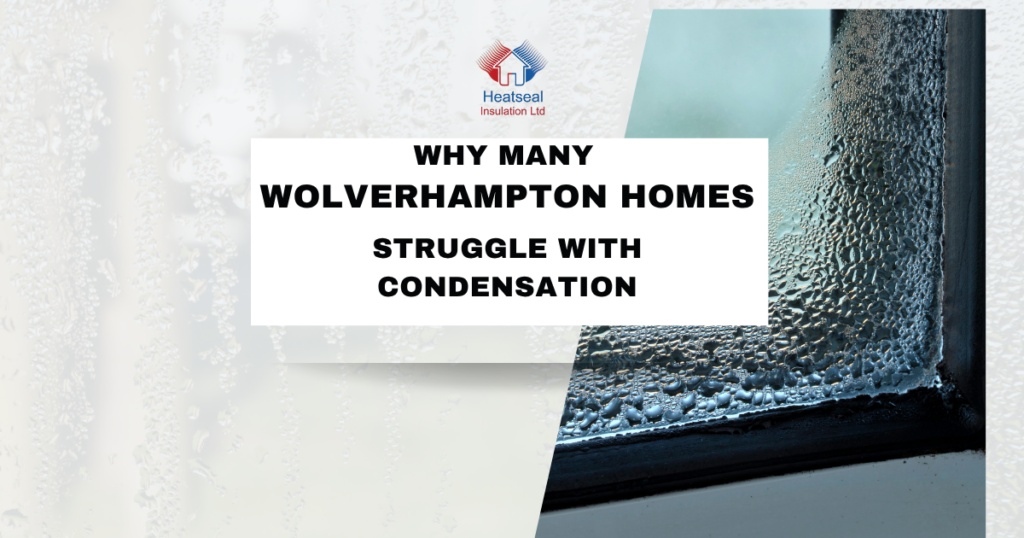
Why Many Wolverhampton Homes Struggle With Condensation
Condensation is a widespread issue in many Wolverhampton homes, especially during colder months when windows mist up, walls feel damp, and black mould begins to appear in corners or behind furniture. While it may seem like a simple moisture problem, it is often a sign of deeper issues such as heat loss, poor insulation, and limited ventilation.
At Heatseal Insulation, we regularly help homeowners identify the root causes of condensation and improve insulation performance to create warmer, drier, and more energy-efficient homes.
Understanding why condensation is so common in Wolverhampton properties is the first step toward preventing it.
What Causes Condensation in Homes?
Condensation forms when warm, moist air meets a cold surface. As the air cools, it releases water droplets that settle on:
- Windows
- Walls
- Ceilings
- Cold corners
- External walls
In everyday life, moisture is constantly produced through cooking, bathing, breathing, and drying clothes indoors. When this moisture cannot escape, it builds up inside the home.
1. High Heat Loss in Older Wolverhampton Housing
A major reason condensation is so common in Wolverhampton is heat loss through poorly insulated homes.
Many properties in the area were built before modern insulation standards and may have:
- Thin or outdated loft insulation
- Solid brick walls without insulation
- Draughty roofs and floors
- Single-glazed windows
When heat escapes, internal surfaces become colder, creating ideal conditions for condensation to form.
2. Poor Loft Insulation
Loft insulation plays a major role in maintaining indoor temperatures.
In many homes, insulation is:
- Below recommended depth
- Compressed or uneven
- Missing in some areas
Current UK guidance recommends around 270mm of loft insulation, but many properties fall well below this level.
When loft insulation is insufficient, heat escapes through the roof and ceilings become cold, increasing condensation risk.
3. Limited Ventilation in Modernised Homes
Many Wolverhampton homes have been partially upgraded over time, improving insulation and sealing draughts. However, this can sometimes reduce natural airflow.
Without proper ventilation:
- Moist air becomes trapped indoors
- Humidity levels rise
- Condensation forms more easily on cold surfaces
Common problem areas include bathrooms, kitchens, and bedrooms.
4. Cold External Walls and Thermal Bridging
External walls in older homes often become very cold during winter.
This is especially common in:
- Solid brick properties
- Corner rooms
- Areas with little or no wall insulation
Cold spots encourage moisture to settle, leading to damp patches and mould growth.
5. Everyday Moisture Build-Up
Even without visible leaks, households produce significant moisture daily from:
- Cooking
- Showering and bathing
- Drying clothes indoors
- Breathing in occupied rooms
In winter, this moisture has fewer escape routes and quickly builds up indoors.
6. Furniture Blocking Airflow
A surprisingly common issue is furniture placed against external walls.
This can:
- Restrict airflow
- Trap moisture behind furniture
- Create hidden mould growth
Bedrooms are particularly affected, especially behind wardrobes and beds.
7. Cold Bedrooms and Overnight Condensation
Many Wolverhampton homes experience condensation overnight in bedrooms because:
- Windows cool down quickly
- Breathing increases humidity levels
- Curtains restrict airflow around glass
- Heating is often turned down at night
This combination creates ideal conditions for condensation to form.
Signs of a Condensation Problem
You may notice:
- Foggy or wet windows in the morning
- Black mould around frames or corners
- Damp or musty smells
- Cold, clammy walls
- Peeling paint or wallpaper
- Water droplets on glass or walls
These signs often indicate both moisture build-up and heat loss issues.
How Insulation Helps Reduce Condensation
Improving insulation is one of the most effective ways to reduce condensation in Wolverhampton homes.
Loft insulation helps by:
- Reducing heat loss through the roof
- Keeping ceilings and walls warmer
- Minimising cold surfaces where moisture forms
Warmer surfaces make it harder for condensation to develop.
The Importance of Ventilation Balance
While insulation reduces heat loss, ventilation helps remove excess moisture.
A healthy home needs both:
- Insulation to retain heat
- Ventilation to control humidity
Without this balance, condensation problems can continue even in upgraded homes.
How to Reduce Condensation in Your Home
Improve Loft Insulation
Upgrade insulation to around 270mm depth to reduce heat loss and cold surfaces.
Increase Ventilation
- Use extractor fans in kitchens and bathrooms
- Open windows briefly each day
- Keep air vents clear
Reduce Indoor Moisture
- Dry clothes outdoors where possible
- Cover pans when cooking
- Avoid drying laundry indoors without ventilation
Improve Airflow Around Furniture
- Leave gaps between furniture and external walls
- Allow air to circulate freely
Professional Insulation Support
At Heatseal Insulation, we provide expert loft insulation services designed to reduce heat loss and help control condensation problems in Wolverhampton and surrounding areas.
We assess:
- Loft insulation condition and depth
- Heat loss through roof and walls
- Ventilation performance
- Damp and condensation risks
- Overall home energy efficiency
Final Thoughts
Condensation is a common issue in Wolverhampton homes due to a combination of heat loss, poor insulation, and limited ventilation. Older housing stock and colder winter conditions make the problem even more noticeable.
By improving loft insulation, increasing ventilation, and reducing indoor moisture, homeowners can significantly reduce condensation and improve overall comfort.
To learn more about reducing heat loss and improving insulation, visit Heatseal Insulation today.