
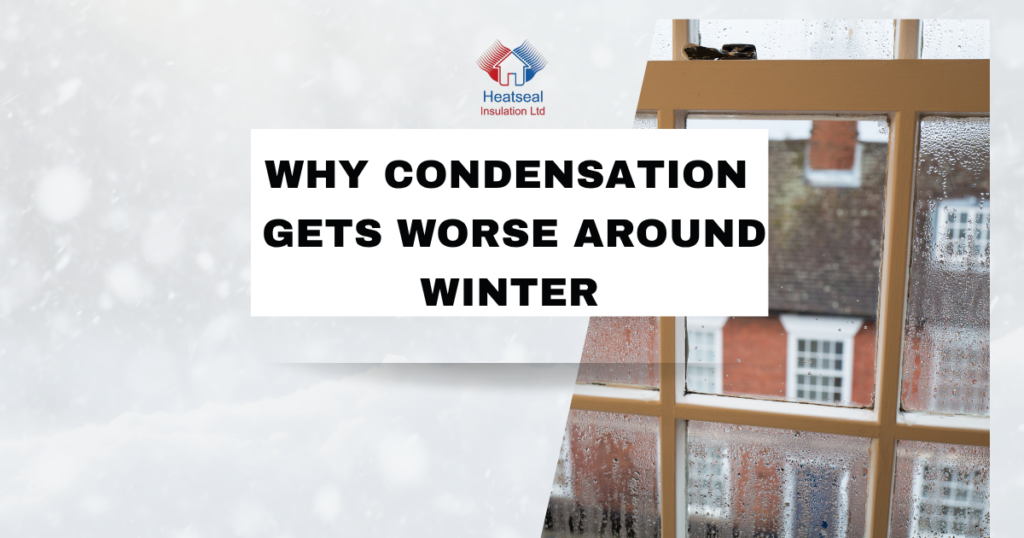
Why Condensation Gets Worse In Winter
Condensation is a common problem in UK homes, but it often becomes much more noticeable during winter. Windows mist up more often, walls feel colder, and black mould can start appearing in corners, behind furniture, and around window frames.
At Heatseal Insulation, we help homeowners reduce condensation by tackling one of its main root causes: heat loss through poorly insulated homes. Understanding why condensation gets worse in winter is key to preventing damp, mould, and cold living conditions.
What Is Condensation?
Condensation forms when warm, moist air meets a cold surface. The air cools quickly, turning invisible moisture into water droplets.
These droplets commonly appear on:
- Windows
- Walls
- Ceilings
- Mirrors
- Cold corners of rooms
In winter, this process becomes much more severe due to temperature differences inside and outside the home.
Why Condensation Gets Worse in Winter
- Bigger Temperature Differences Between Inside and Outside
Winter creates a strong contrast between warm indoor air and freezing outdoor temperatures.
This causes:
- Windows to become much colder
- External walls to chill quickly
- Roof spaces to lose heat faster
When warm indoor air hits these cold surfaces, condensation forms more easily and in larger amounts.
- Heat Loss Through Poor Insulation
One of the biggest contributors to winter condensation is heat escaping from the home.
Common weak points include:
- Poor loft insulation
- Uninsulated walls
- Draughty roofs
- Gaps around doors and windows
When heat escapes, surfaces inside the home become colder, especially upstairs rooms and external walls. Cold surfaces attract moisture and increase condensation.
- Homes Are Kept Closed Up
During winter, people naturally:
- Keep windows closed
- Reduce ventilation
- Dry clothes indoors
- Spend more time cooking and showering inside
This leads to higher humidity levels, meaning more moisture is trapped inside the home with fewer ways to escape.
- Cold Surfaces Encourage Moisture Build-Up
Condensation always forms on the coldest surfaces in a room, such as:
- Window glass and frames
- External walls
- Corners of rooms
- Areas behind furniture
If insulation is poor, these surfaces become even colder, increasing condensation risk.
- Poor Loft Insulation Makes Upstairs Rooms Colder
Heat rises, so loft insulation plays a major role in keeping homes warm.
Without adequate insulation:
- Heat escapes through the roof
- Upstairs rooms cool quickly
- Ceilings become cold
- Moisture is more likely to condense
This is why condensation often appears in bedrooms and upstairs corners first.
- Increased Indoor Moisture in Winter
We generate moisture every day through normal activities such as:
- Cooking
- Showering
- Breathing
- Drying clothes indoors
In winter, because homes are sealed up, this moisture has nowhere to go and builds up inside.
Signs Condensation Is Worse in Winter
You may notice:
- Foggy or dripping windows in the morning
- Black mould patches
- Damp walls or ceilings
- Musty smells in closed rooms
- Cold, clammy surfaces
- Increased window condensation overnight
These are clear signs that moisture levels and heat loss are combining.
Why Bedrooms Are Especially Affected
Bedrooms are often the worst affected rooms because:
- They are kept warmer overnight
- Breathing increases humidity
- Curtains trap moisture near windows
- Furniture restricts airflow
If insulation is poor, these issues become more severe in winter.
How Loft Insulation Helps Reduce Winter Condensation
Improving loft insulation helps by:
- Keeping heat inside the home
- Raising internal surface temperatures
- Reducing cold spots on walls and ceilings
- Minimising heat loss through the roof
Warmer surfaces make it harder for condensation to form.
Other Ways to Reduce Winter Condensation
Alongside insulation improvements, homeowners can:
- Ventilate rooms daily, even in winter
- Use extractor fans in kitchens and bathrooms
- Avoid drying clothes indoors where possible
- Keep furniture slightly away from external walls
- Maintain consistent indoor heating
These steps help reduce moisture levels and improve airflow.
Professional Insulation Support
At Heatseal Insulation, we provide expert loft insulation services designed to reduce heat loss, improve energy efficiency, and help control condensation problems in UK homes.
We assess:
- Loft insulation condition and thickness
- Heat loss through roof and walls
- Ventilation performance
- Damp and condensation risk areas
Final Thoughts
Condensation gets worse in winter because of colder temperatures, increased moisture indoors, and greater heat loss from poorly insulated homes. When surfaces become cold and ventilation is limited, moisture has nowhere to go and turns into water droplets.
Improving loft insulation is one of the most effective long-term ways to reduce condensation, prevent mould, and keep your home warmer and healthier.
To learn more about reducing heat loss and improving insulation, visit Heatseal Insulation today.