
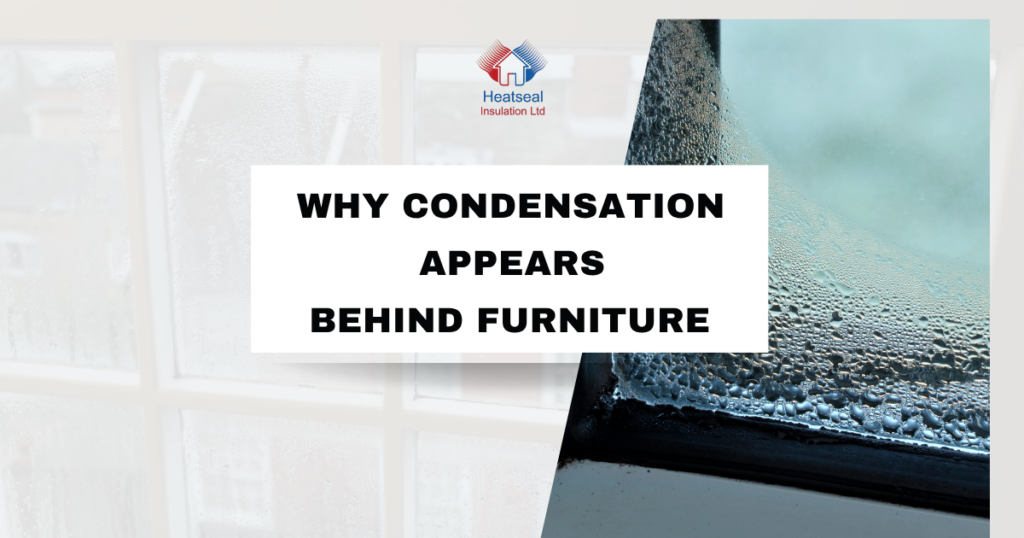
Why Condensation Appears Behind Furniture
Condensation behind furniture is a common problem in many UK homes, especially during colder months. You may notice damp patches, mould growth, peeling wallpaper, or a musty smell behind wardrobes, sofas, beds, or cabinets placed against external walls.
While it can seem like a serious structural issue, condensation is often caused by poor airflow, cold surfaces, and inadequate insulation.
At Heatseal Insulation, we help homeowners reduce condensation and improve home energy efficiency through effective loft insulation and heat loss reduction solutions.
What Causes Condensation Behind Furniture?
Condensation forms when warm, moisture-filled air comes into contact with a colder surface.
Behind furniture, airflow is restricted, which means warm indoor air becomes trapped. If the wall behind the furniture is cold enough, moisture in the air condenses into water droplets.
Over time, this can lead to:
- Damp patches
- Black mould growth
- Musty odours
- Peeling paint or wallpaper
- Cold and uncomfortable rooms
Why Is It Worse Behind Furniture?
Furniture placed tightly against walls blocks air circulation and prevents warm air from reaching the surface properly.
This creates colder areas where moisture can build up more easily.
Common problem areas include:
- Behind wardrobes
- Behind beds
- Behind sofas
- In corners of rooms
- Along external walls
The issue is especially common in older UK homes with poor insulation.
Cold External Walls and Heat Loss
External walls are naturally colder than internal walls, particularly if the property has poor insulation.
When heat escapes through walls or the roof, surfaces become colder and more prone to condensation.
Common causes include:
- Poor loft insulation
- Uninsulated walls
- Draughts
- Single glazing
- Gaps around windows and doors
Reducing heat loss helps keep wall surfaces warmer and lowers the risk of condensation forming.
How Poor Loft Insulation Contributes to Condensation
Many homeowners do not realise that inadequate loft insulation can contribute to condensation problems throughout the home.
Without proper insulation:
- Heat escapes through the roof
- Rooms cool down faster
- Walls and ceilings become colder
- Moisture is more likely to condense on cold surfaces
Professional loft insulation helps maintain more stable indoor temperatures and reduces cold spots that contribute to condensation.
Excess Moisture in the Home
Modern homes generate large amounts of moisture from everyday activities such as:
- Cooking
- Showering
- Drying clothes indoors
- Breathing
- Using tumble dryers
Without proper ventilation, moisture levels rise and condensation becomes more likely.
Signs Condensation Is Becoming a Problem
You may have a condensation issue if you notice:
- Black mould behind furniture
- Damp patches on walls
- Water droplets on windows
- Musty smells
- Cold walls
- Peeling wallpaper or paint
If left untreated, condensation can damage walls, furnishings, and indoor air quality.
How to Prevent Condensation Behind Furniture
Improve Loft Insulation
Keeping your home warmer helps reduce cold surfaces where condensation forms.
Proper loft insulation can:
- Reduce heat loss
- Improve room temperatures
- Lower moisture build-up
- Increase energy efficiency
Leave Space Behind Furniture
Avoid placing furniture directly against external walls. Leaving a small gap allows air to circulate and helps prevent moisture build-up.
Improve Ventilation
Good airflow is essential for reducing condensation.
Helpful measures include:
- Opening windows regularly
- Using extractor fans
- Improving loft ventilation
Avoiding blocked air vents
Reduce Indoor Moisture
Simple steps such as drying clothes outdoors when possible and using lids while cooking can help reduce humidity levels.
Maintain Consistent Heating
Keeping rooms at a stable temperature helps prevent surfaces becoming excessively cold.
Can Condensation Cause Mould?
Yes. Persistent condensation creates damp conditions that allow mould to grow, especially behind furniture where airflow is poor.
Black mould can:
- Damage walls and furnishings
- Cause unpleasant smells
- Affect indoor air quality
- Trigger respiratory irritation
Addressing insulation and ventilation issues early can help prevent long-term problems.
Professional Insulation Solutions
At Heatseal Insulation, we help homeowners reduce heat loss and improve home comfort with professional loft insulation services.
Our team can assess:
- Loft insulation condition
- Heat loss areas
- Ventilation issues
- Damp and condensation risks
- Overall home energy efficiency
Improving insulation is often one of the most effective ways to reduce condensation problems in colder areas of the home.
Final Thoughts
Condensation behind furniture is usually caused by cold walls, trapped moisture, and poor airflow. In many UK homes, inadequate insulation allows surfaces to become colder, making condensation more likely.
Improving loft insulation, reducing heat loss, and increasing ventilation can help create a warmer, healthier, and more comfortable home environment.
To learn more about professional insulation solutions, visit Heatseal Insulation today.