
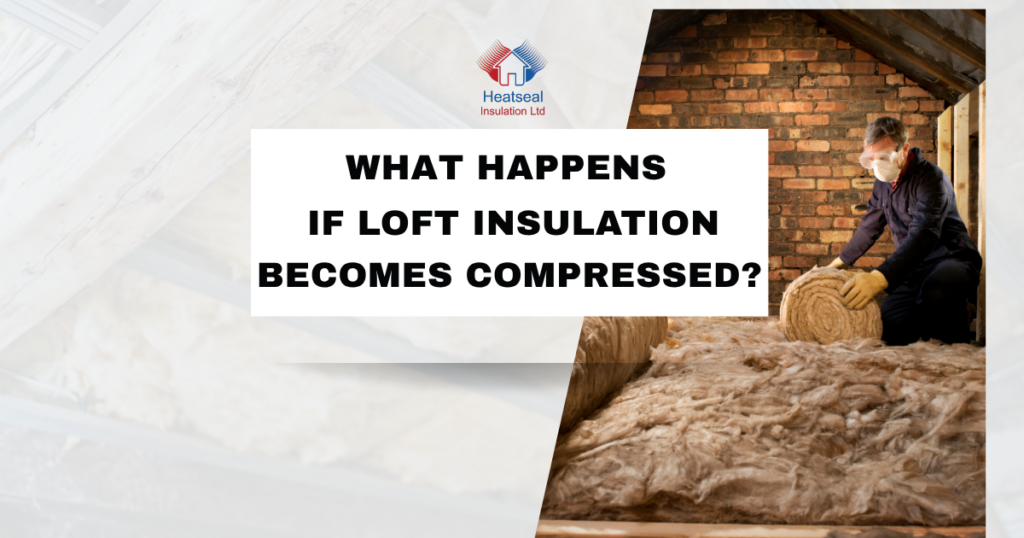
What Happens If Loft Insulation Becomes Compressed?
Loft insulation is designed to trap air and slow down heat loss from your home. But when it becomes compressed, its ability to do this is significantly reduced. Many homeowners are unaware that simply storing items in the loft or walking over insulation can cause it to lose effectiveness over time.
At Heatseal Insulation, we often see properties where insulation is present but no longer performing properly due to compression, damage, or poor installation. Understanding what happens when loft insulation becomes compressed can help you protect your home’s energy efficiency and avoid unnecessary heat loss.
Why Loft Insulation Works
Loft insulation works by trapping pockets of air within its fibres. These trapped air pockets slow down heat transfer, keeping warmth inside your home.
When insulation is:
- Thick and fluffy → it performs well
- Flat and compressed → it loses effectiveness
The structure of the material is key to its performance.
What Causes Loft Insulation to Become Compressed?
There are several common reasons insulation becomes compressed:
- Storage in the Loft
One of the most common causes is placing heavy boxes or items directly on top of insulation. This squashes the material and reduces its thickness.
- Walking Directly on Insulation
Stepping on insulation repeatedly compresses it and flattens the fibres, especially in frequently accessed loft spaces.
- Poor Installation
If insulation is installed incorrectly or unevenly, it may already be partially compressed from the start.
- Moisture Damage
Damp insulation can lose its loft (thickness) and become heavy and compacted, reducing performance.
- Ageing and Wear
Over time, insulation can naturally settle and flatten, especially in older homes.
What Happens When Insulation Is Compressed?
When loft insulation becomes compressed, it loses its ability to trap air effectively. This leads to several problems:
Increased Heat Loss
Compressed insulation allows heat to escape more easily through the roof. This is one of the biggest causes of energy loss in UK homes.
In some cases, up to 25% of a home’s heat can be lost through an underperforming loft.
Higher Energy Bills
As heat escapes faster, your heating system must work harder to maintain temperature. This results in:
- Higher gas and electricity bills
- Longer heating times
- Increased energy consumption
Cold Upstairs Rooms
Bedrooms and upstairs areas often feel colder because heat is escaping directly above them.
Uneven Temperatures in the Home
You may notice:
- Warm downstairs rooms
- Cold upstairs rooms
- Draught-like sensations even when windows are closed
Reduced Energy Efficiency
Compressed insulation lowers your home’s overall energy performance, which can also impact your EPC rating.
Signs Your Loft Insulation Is Compressed
You may have a compression issue if you notice:
- Flat or thin-looking insulation
- Visible loft joists with little coverage
- Well-worn pathways in the loft
- Cold upstairs rooms despite heating
- Rising energy bills
- Areas where insulation looks “squashed down”
These are all indicators that your insulation is no longer performing effectively.
Why Compressed Insulation Is a Hidden Problem
Unlike leaks or broken boilers, compressed insulation is not always obvious. It often goes unnoticed because:
- The insulation is still physically present
- The loft may still look “insulated” at a glance
- Problems develop gradually over time
However, even slightly compressed insulation can significantly reduce thermal performance.
How Loft Insulation Should Look
Healthy loft insulation should be:
- Thick and fluffy
- Evenly spread across the loft floor
- Free from heavy compression
- Around 270mm deep in most UK homes
If it looks flat or uneven, it may need attention or topping up.
Can Compressed Loft Insulation Be Fixed?
Yes — in many cases, it can be improved or replaced.
Solutions include:
- Topping up insulation to restore depth
- Replacing heavily damaged sections
- Installing raised loft boarding systems for storage
- Improving loft access pathways to prevent further compression
A professional assessment helps determine the best solution.
How to Prevent Loft Insulation from Becoming Compressed
Use Raised Loft Boarding
If you use your loft for storage, raised boarding systems help prevent weight being placed directly on insulation.
Avoid Walking on Insulation
Stick to joists or designated boarding areas when accessing the loft.
Store Items Correctly
Never place heavy items directly on insulation material.
Regular Inspections
Check your loft periodically for signs of flattening or damage.
The Link Between Compression and Heat Loss
Compressed insulation reduces the air pockets needed to slow heat transfer. As a result:
- Heat escapes through the roof more quickly
- Rooms become harder to heat
- Energy efficiency drops significantly
This is why loft insulation condition is just as important as insulation depth.
Professional Loft Insulation Services
At Heatseal Insulation, we specialise in identifying and resolving insulation performance issues, including compression and heat loss problems.
We can assess:
- Loft insulation condition and thickness
- Areas of compression or damage
- Heat loss through the roof
- Energy efficiency improvements
- Damp and ventilation concerns
Our goal is to ensure your insulation performs at its full potential.
Final Thoughts
When loft insulation becomes compressed, it loses its ability to trap heat effectively. This leads to increased heat loss, higher energy bills, and colder rooms—especially upstairs.
The good news is that compressed insulation can often be repaired or upgraded, restoring your home’s warmth and efficiency.
If you suspect your loft insulation is no longer performing as it should, a professional inspection can help identify the issue and recommend the right solution.
To learn more about improving insulation and reducing heat loss, visit Heatseal Insulation today.