
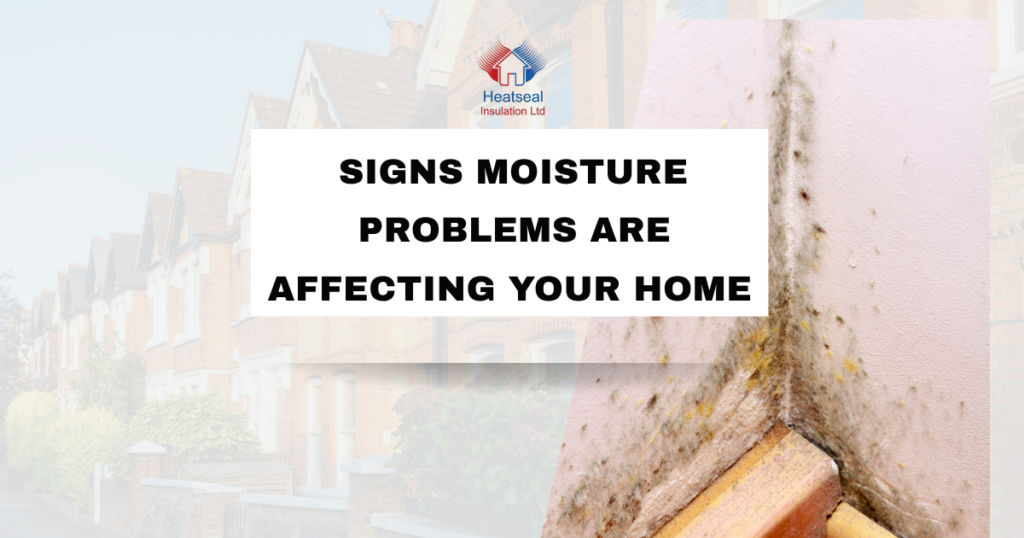
Signs Moisture Problems Are Affecting Your Home
Moisture problems are one of the most common issues affecting UK homes, especially during colder months. While some signs are obvious, such as mould growth or damp patches, others can be subtle and easy to miss until the problem becomes more serious.
At Heatseal Insulation, we help homeowners identify the root causes of moisture issues, including heat loss and poor insulation, which often contribute to condensation and damp in the home.
Recognising the early warning signs can help prevent long-term damage and improve your home’s comfort and energy efficiency.
What Causes Moisture Problems in Homes?
Moisture problems usually develop when excess humidity builds up indoors and cannot escape. This is often made worse by cold surfaces caused by heat loss and poor insulation.
Common causes include:
- Condensation from everyday activities
- Poor loft insulation
- Inadequate ventilation
- Cold walls and ceilings
- Draughts and air leaks
- Drying clothes indoors
- Cooking and bathing without proper extraction
When moisture meets cold surfaces, it turns into water droplets, leading to damp and mould growth.
1. Black Mould on Walls, Ceilings, or Windows
One of the clearest signs of a moisture problem is black mould.
You may notice it:
- Around window frames
- In corners of rooms
- Behind furniture
- On ceilings in upstairs rooms
Mould grows where moisture sits for long periods, especially on cold surfaces. This is often linked to heat loss and poor insulation.
2. Condensation on Windows
If your windows frequently appear wet or fogged up, especially in the morning, this is a strong indicator of excess moisture in the home.
Condensation forms when warm air hits cold glass. In winter, this becomes more common due to increased heat loss and reduced ventilation.
3. Musty or Damp Smells
A persistent musty smell is often one of the earliest warning signs of moisture problems.
This smell is caused by:
- Hidden mould growth
- Damp materials
- Poor airflow in rooms
It is especially common in closed spaces like bedrooms, cupboards, and behind furniture.
4. Peeling Paint or Wallpaper
Moisture can weaken adhesives and surface finishes, leading to:
- Bubbling paint
- Peeling wallpaper
- Stained plaster
This often appears on external walls where temperatures are colder due to heat loss.
5. Cold and Damp Walls
Walls that feel cold or slightly damp to the touch can indicate insulation issues or condensation build-up.
Poor loft insulation and uninsulated walls allow heat to escape, making surfaces colder and more likely to attract moisture.
6. Water Droplets on Walls or Ceilings
Visible water droplets forming on internal surfaces is a clear sign of condensation.
This often happens:
- Overnight in bedrooms
- In poorly ventilated rooms
- On external walls during winter
7. Increased Heating Costs
Moisture problems are often linked to poor energy efficiency.
If your home is losing heat through the roof or walls, your heating system will work harder to maintain temperature, leading to higher energy bills.
8. Cold Spots and Uneven Room Temperatures
If some areas of your home feel colder than others, it may indicate heat loss caused by:
- Poor loft insulation
- Draughts around windows and doors
- Cold bridging in walls
Cold spots increase the risk of condensation forming in specific areas.
9. Mould Behind Furniture
Furniture placed against external walls can trap moisture and restrict airflow.
This creates ideal conditions for mould growth, especially in bedrooms and living rooms.
10. Damp Patches That Come and Go
Intermittent damp patches often appear during colder months and may disappear in warmer weather.
This is usually linked to condensation rather than rising damp or leaks.
How Insulation Affects Moisture Problems
Poor insulation is a major contributor to moisture issues in UK homes.
When heat escapes through the roof or walls:
- Internal surfaces become colder
- Condensation forms more easily
- Mould is more likely to grow
Upgrading loft insulation helps maintain warmer internal temperatures and reduces the conditions that allow moisture problems to develop.
How to Reduce Moisture Problems in Your Home
Improve Loft Insulation
Proper loft insulation helps:
- Reduce heat loss
- Keep walls and ceilings warmer
- Lower condensation risk
- Improve energy efficiency
Increase Ventilation
Good airflow helps remove excess moisture:
- Open windows regularly
- Use extractor fans
- Keep air vents clear
Maintain Consistent Heating
Keeping a steady temperature helps prevent surfaces from becoming too cold.
Reduce Indoor Moisture
Simple habits make a difference:
- Dry clothes outdoors where possible
- Cover pans when cooking
- Avoid blocking airflow behind furniture
When to Get Professional Help
If moisture problems keep returning, it may indicate a deeper issue with insulation or ventilation.
A professional assessment can identify:
- Heat loss areas
- Insulation effectiveness
- Ventilation performance
- Damp and condensation risks
Professional Insulation Services
At Heatseal Insulation, we provide expert loft insulation services designed to reduce heat loss and help control moisture-related issues in UK homes.
We assess:
- Loft insulation condition and thickness
- Heat loss through roof spaces
- Ventilation and airflow issues
- Damp and condensation risk areas
Final Thoughts
Moisture problems in the home often start with excess humidity combined with cold surfaces caused by poor insulation and heat loss. Early warning signs such as mould, condensation, and damp smells should not be ignored.
Improving loft insulation and ventilation can make a significant difference in reducing moisture problems and creating a warmer, healthier home.
To learn more about improving insulation and reducing heat loss, visit Heatseal Insulation today.